
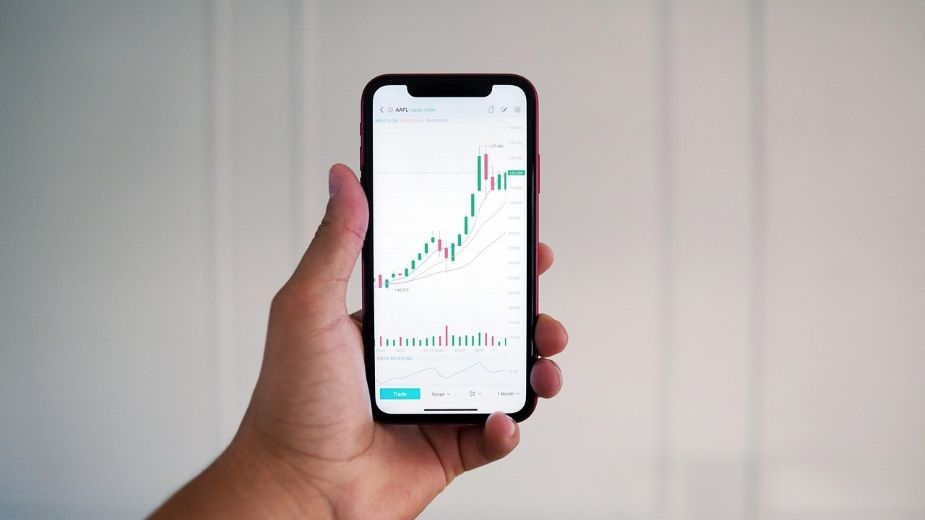
Finding the best investing app for beginners doesn’t have to feel overwhelming. I started investing in the stock market after graduating college, and the compound growth of my investments was the main driver behind achieving a $1 million net worth and financial freedom in just 10 years.
Whether you’re starting with $5 or $5,000, the right platform transforms your financial future. I’ve tested these investment apps to help you choose one that matches your goals.
What Makes the Best Investing App for Beginners?
What features should beginners look for in investment apps?
The best investing app for beginners offers commission-free trading as standard. Platforms like Fidelity, Schwab, and Robinhood charge $0 for stocks and ETFs. More money invested, less lost to fees.
Key features to prioritize:
- User-friendly interface – Clear buttons and simple menus
- Low or no account minimums – Start with $0 to $10
- Fractional shares – Buy $1 of Amazon instead of a full $180 share
- Educational resources – Tutorials that don’t make you feel stupid
- Reliable customer support – Real help when you need it
Fractional shares are game-changers. They let you build a diversified portfolio with just $25 spread across five different companies.
If you’re looking for a beginner-friendly overview of stock market investing, start with my complete guide to investing for beginners.
Are investing apps safe and how much money do you need to start?
Yes, investing apps are safe when regulated. All reputable platforms register with the SEC and FINRA. SIPC insurance protects up to $500,000 per account if the brokerage fails—though this doesn’t protect against market losses.
Minimum amounts to start investing:
| Platform | Minimum to Start |
|---|---|
| Acorns | $5 |
| Betterment | $10 |
| Fidelity | $0 |
| Robinhood | $0 |
| Charles Schwab | $0 |
| Vanguard ETFs | $0 |
| Vanguard Mutual Funds | $1,000 |
Micro-investing removed traditional barriers. Instead of needing thousands, start with spare change. Even $50 monthly for 30 years at 7% return grows to roughly $61,000.
1. Fidelity Review: Best Investment App for Commission-Free Trading
Best All-Around
Why is Fidelity the best app for commission-free trading?
Fidelity offers $0 commissions on U.S. stocks and ETFs with zero account minimums. Open an account today without depositing anything and trade when ready.
Why beginners love Fidelity:
- Fractional shares – Invest $1 in expensive stocks like Apple
- 3,300+ no-fee mutual funds – Incredible variety
- Robust research tools – Real-time data, company analysis, screening tools
- Stocks, ETFs, mutual funds, bonds, options, and crypto available
- Easily reinvest dividends – Learn this passive income strategy with my breakdown of dividend investing for beginners
Want $10 of Apple trading at $180/share? Done. True diversification even with limited capital.
What makes Fidelity ideal for beginner investors?
The mobile app is clean and intuitive. Placing your first trade takes just a few taps—no finance degree required.
Educational perks:
- Free Learning Center with articles, videos, and courses
- Live webinars on market topics
- Interactive planning tools
Retirement strength:
- Traditional IRAs, Roth IRAs, SEP IRAs
- 401(k) rollovers welcome
- Same $0 commission structure
Customer service operates 24/7 with real humans answering questions. Peace of mind matters when navigating unfamiliar territory.
2. Betterment Review: Best Robo-Advisor for Automated Investing
Easiest Investing App for Beginners
What is Betterment and how does automated investing work for beginners?
Betterment is a robo-advisor handling all investment decisions automatically. Answer a few questions about your goals, and Betterment builds a customized portfolio of low-cost ETFs. No stock picking required.
If you’re looking for the easiest investing app for beginners, a robo-advisor like Betterment gives you a fully automated investment portfolio. Using Betterment is exactly how I got started investing in my early 20s — I didn’t know anything, nor did I need to, to become an investor and start building wealth.
How it works:
- Automatic portfolio diversification across thousands of stocks and bonds
- Asset allocation adjusts as you near your goal (90% stocks when young, shifting to bonds as you age)
- Automatic rebalancing maintains your target allocation
- Tax-loss harvesting saves hundreds in taxes annually
This hands-off approach was once only for wealthy investors with expensive advisors. Now you get it with a $10 minimum.
How much does Betterment cost and is it worth it?
Betterment charges $4 per month for accounts under $20,000, or 0.25% annually with $250+ monthly deposits. Once you hit $20,000, it automatically converts to 0.25% regardless of deposit frequency.
For a $10,000 account, that’s just $25 yearly—far cheaper than traditional advisors charging 1% ($100 on $10,000).
| Account Balance | Annual Cost | Effective Rate |
|---|---|---|
| $1,000 | $48 | 4.8% |
| $10,000 | $25 | 0.25% |
| $50,000 | $125 | 0.25% |
Worth it? Absolutely for passive investors wanting professional management without time commitment. I break down a full review of Betterment as the choice for beginners looking for easy, automated investing.
3. Vanguard Review: Best App for Index Fund Investing
Most Reputable and Trustworthy
Why is Vanguard best for long-term index fund investing?
Vanguard slashed expense ratios, cutting costs on 168 share classes and saving investors over $350 million annually. Lowest fees win over decades—paying 0.04% instead of 0.50% means tens of thousands extra in retirement.
Vanguard’s edge:
- $10.1 trillion in assets managed
- Industry pioneer of index investing
- Popular funds like VOO charge just 0.03% annually ($3 per $10,000)
- Unmatched selection tracking U.S., international, emerging markets
The buy-and-hold philosophy aligns perfectly with beginner investors letting time do the heavy lifting.
What are Vanguard’s fees and is the app easy for beginners?
Commission-free Vanguard ETF trades mean zero transaction fees. Third-party ETFs also trade free.
Minimum requirements:
- Vanguard ETFs: $0 minimum (fractional shares available)
- Most mutual funds: $1,000 minimum
- Target retirement funds: $1,000 minimum
The interface prioritizes substance over style. Less flashy than Robinhood but delivers everything needed for buy-and-hold investing. Navigation is straightforward once you learn the layout.
Vanguard is well known for its popular ETFs, and you can read about why I think ETFs are the only stock you need in my guide to investing in ETFs for beginners.
4. Robinhood Review: Most User-Friendly Investment App
Best Mobile-First Investing App
What makes Robinhood the easiest investing app to use?
Robinhood revolutionized investing with its intuitive design. Large buttons, minimal text, feels like social media instead of a brokerage. Account setup takes minutes, not hours.
Why it’s simple:
- Tap a stock → tap buy → enter amount → confirm
- No confusing order types
- Clear buying power display
- Commission-free stocks, ETFs, options, and cryptocurrency
Fractional shares let you buy $5 of Tesla or $100 of Microsoft. Perfect for experimenting with small amounts while building confidence.
What are Robinhood’s pros and cons for beginners?
Pros:
- Zero learning curve—if you use Instagram, you can use Robinhood
- No commissions
- Instant deposits let you trade immediately
Cons:
- Basic research tools (no in-depth analyst reports)
- Sparse educational content
- No mutual funds or bonds
Best for beginners prioritizing ease over comprehensive features. You might outgrow it as your strategy becomes more sophisticated.
5. Charles Schwab Review: Best App for Investment Education
Best for Stock Market Learners
Why is Charles Schwab best for learning while investing?
Charles Schwab provides comprehensive free education: webinars, tutorials, courses, and research tools. The Learning Center organizes content by experience level—from “What is a stock?” to advanced tax strategies.
Learning advantages:
- paperMoney simulator – Practice with virtual $1 million risk-free
- Live Trading Workshops nationwide
- Schwab Intelligent Portfolios robo-advisor at 0% advisory fee
The paper trading environment uses real-time data. Test strategies, learn from mistakes, build confidence—all before risking actual money.
What does Charles Schwab offer beginners and what does it cost?
Zero barriers:
- Commission-free trading on stocks, ETFs, options
- $0 account minimum
- Fractional shares with $5 minimum
- Free robo-advisor (only pay underlying ETF expenses averaging 0.08-0.15%)
Retirement accounts:
- Traditional IRAs, Roth IRAs, SEP IRAs, 401(k) rollovers
- Free consultation with retirement specialists
| Service | Cost | Minimum | Best For |
|---|---|---|---|
| Self-Directed | $0 | $0 | Hands-on learners |
| Intelligent Portfolios | 0% fee | $5,000 | Automated |
| Intelligent Portfolios Premium | $30/month | $25,000 | Automated + advisor |
6. Acorns Review: Best Micro-Investing App for Fractional Shares
Best for Tight Budgets
How does Acorns’ round-up feature help beginners invest automatically?
Acorns rounds up every purchase to the nearest dollar and invests the spare change. Coffee for $3.75? Invests $0.25. Lunch for $12.40? Another $0.60 invested.
Why it works:
- Painless amounts—$0.50 here, $0.75 there
- Users often invest $50-$100 monthly without consciously deciding
- Perfect for people who struggle with traditional budgeting
Additional features:
- Recurring investments from $5
- Found Money program—cash back from 450+ brands goes straight to investments
- Five portfolio options from conservative to aggressive
Psychology beats willpower. Instead of forcing yourself to transfer $100 monthly, you invest microscopic amounts dozens of times.
Is Acorns worth the monthly fee for small investors?
Acorns charges $3, $6, or $12 monthly depending on tier:
- Bronze ($3) – Basic investing and retirement accounts
- Silver ($6) – Adds checking with higher APY
- Gold ($12) – Includes kids’ accounts and individual stocks
| Account Balance | Effective Annual Rate |
|---|---|
| $500 | 7.2% |
| $1,000 | 3.6% |
| $5,000 | 0.72% |
| $10,000 | 0.36% |
Worth it? Yes for building initial habits. If round-ups help you invest $100 monthly when you previously saved nothing, $3 is absolutely worth it. Consider switching to percentage-based platforms once you exceed $10,000-$15,000.
7. Webull Review: Best for Advanced Market Analysis Tools for Beginners
Best for Active Trader Practice
What advanced tools does Webull provide to new investors?
Webull offers commission-free trading with no minimum, plus paper trading with $1 million virtual money. Practice risk-free using real-time data.
Advanced capabilities:
- 50+ technical indicators – RSI, MACD, Bollinger Bands
- Multiple chart types with drawing tools
- Real-time data during trading hours
- Extended hours trading – Pre-market (4 AM) and after-hours (8 PM EST)
Sophisticated analysis once limited to professionals now sits at your fingertips. The interface is busier than Robinhood but every element serves a purpose.
Should complete beginners start with Webull or simpler platforms?
Webull suits growth-minded beginners committed to learning technical analysis. Paper trading lets you practice for weeks before risking real money.
Consider Webull if:
- You enjoy learning technical details
- You want tools supporting expanding knowledge
- You’re intellectually curious about market mechanics
Choose simpler platforms if:
- You prefer set-it-and-forget-it investing
- Detailed charts feel intimidating
- You want purely passive investing
Practice with paper trading for a few weeks first. Learn order types, experiment with charts, get comfortable. Then transition to your funded account with confidence.
How to Choose the Right Investment App
Should you use a robo-advisor or self-directed investing app?
Robo-advisors (Betterment, Schwab Intelligent Portfolios):
- Handle all decisions automatically
- Rebalance and reinvest dividends
- Charge 0.25-0.65% annually
- Perfect for hands-off beginners
Self-directed platforms (Fidelity, Schwab, Robinhood):
- You choose individual investments
- More effort but maximum flexibility
- Pay only fund expense ratios
- Better for active learners
The effort difference is huge. Robo-advisors need quarterly check-ins. Self-directed demands ongoing research and monitoring—potentially several hours weekly.
Match your choice to your personality:
- Want simplicity? → Robo-advisor
- Enjoy learning? → Self-directed
- Unsure? → Start robo-advisor, switch later
How do expense ratios and fees impact your investment returns?
Even tiny fee differences compound dramatically over decades.
Example: $10,000 invested for 30 years at 7% return
| Annual Fee | Ending Balance | Cost of Fees |
|---|---|---|
| 0.04% (Vanguard) | $75,299 | $1,123 |
| 0.25% (Typical robo) | $73,708 | $2,714 |
| 1.00% (Traditional advisor) | $61,387 | $15,035 |
That 1% advisor fee costs you $15,035 over 30 years. Pay attention to expense ratios, advisory fees, and hidden costs like mutual fund loads.
Best Investing Apps for Beginners: Final Recommendations
Which investing app should you choose based on your goals?
Choose Betterment for completely hands-off investing with professional management. Start with $10, set recurring deposits, let time work.
Choose Vanguard for lowest fees on index investing. Buy-and-hold investors keep maximum returns over decades. Start with $1,000 in a target-date fund or buy ETFs with no minimum.
Choose Fidelity or Schwab to learn actively while investing. Exceptional research, education, and customer support. Either choice works for passive index investing or active stock selection.
Choose Robinhood for the simplest interface and crypto access. Zero-barrier entry builds investing habits today. You’ll sacrifice research tools but eliminate intimidation.
Choose Acorns for building habits through automated round-ups. Psychological approach works when traditional budgeting fails. Worth it for your first year building initial portfolio.
Choose Webull for advanced charting and technical analysis learning. Start with paper trading, transition to funded trading once comfortable. Platform grows with you.
How do you start investing with your first app today?
Step 1: Choose your platform based on recommendations above. Download the app and browse the interface—does it feel intuitive?
Step 2: Gather documents. You need:
- Social Security number
- Driver’s license or state ID
- Employment information
- Bank account details
Step 3: Complete the 10-15 minute application. Answer honestly about investment experience and financial situation.
Step 4: Link your bank account and deposit money. Start small—even $25 or $50 gets you started.
Step 5: Make your first investment. Robo-advisors invest automatically. Self-directed? Buy a simple index fund like VTI or VOO.
Step 6: Set up automatic contributions for dollar-cost averaging. Schedule weekly, biweekly, or monthly transfers matching your income schedule.
The hardest part is starting. But once you’ve made that first investment and automated contributions, difficult decisions are behind you. Your portfolio grows in the background while you live your life. And now, you’re an investor.
Ready to buy into the stock market? Follow along with my 6-step beginner’s guide for how to start investing.
Disclaimer: This article is for educational purposes only and is not personalized financial advice. Investment returns are not guaranteed, and all investments carry risk of loss. Consider consulting with a fee-only financial planner for guidance specific to your individual financial situation.


